Palmistry Art: The Visual Language of Your Hands
Palmistry art views your hands as a living canvas. Line flow, mount volume, and subtle markings all work together like strokes in a painting, sketching out temperament, timing, and life themes with structure instead of guesswork.
Palmistry Art Analyzer
Use this hand scanning flow as a practical aid to palmistry art. Instead of random impressions, you get a structured pass through shapes, lines and mounts so that your artistic interpretation of the hand is grounded in clear, repeatable observations.
❤️ When will you find meaningful love?
💼 What opportunities are waiting in your career?
✨ What changes are coming next in your life?
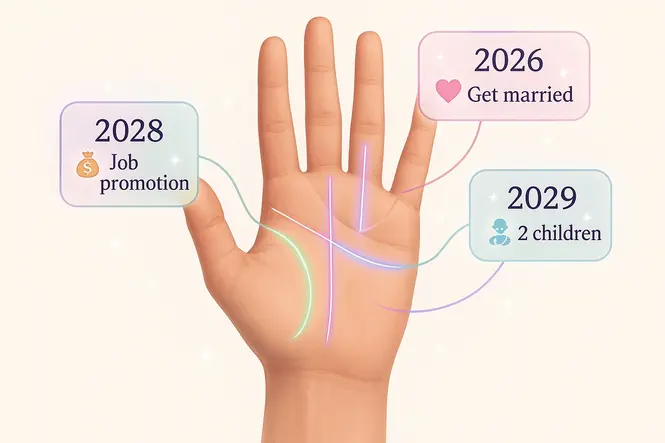
✨ See your future unfold ✨
2-min Quiz
Palm Scan
Personal Guide
37,000+ happy readings
What Is Palmistry Art?
Palmistry art treats the hand as an illustration of character and cycles. Each line has direction, weight, and texture; each mount has volume and tone; together they form a composition that tells a story about how you use energy, relate to others, and move through time.
The Structure Behind Palmistry Art
While palmistry art feels intuitive, it is built on structure: line hierarchy, mount placement, hand proportion and symmetry. Once you understand the grammar, palmistry art becomes less about vague vibes and more about reading a carefully layered visual system.
Origins & Methods
Palmistry art grows out of classical palmistry, illustration, and pattern recognition. The focus is not just on prediction, but on visually mapping how tendencies and choices shape your life story.
Cross-Cultural Insights
Different traditions emphasize different motifs in palmistry art: Indian readings highlight spiritual progress, Western schools focus on psychology and timing, while East Asian approaches stress balance and route selection.
Modern Applications
Today, palmistry art is often used for reflection: creative self-portrait, journaling prompt, or visual anchor when you think about career, relationships, and inner pacing.
Hand Shapes
In palmistry art, earth, air, fire, and water hands are your basic canvas types — each shape changes how the entire “painting” of lines and mounts is read.
Palm Mounts
Mounts add three-dimensional relief to palmistry art, showing where life force, ambition, joy, caution, and communication cluster.
Line Patterns
Lines act like strokes in palmistry art, suggesting direction, rhythm, and emphasis across life areas.
Special Markings
Special markings are like highlights in palmistry art: they draw your eye to turning points, breakthroughs, and lessons.
Key Elements of Palmistry Art
To work with palmistry art seriously, you need a systematic view of shapes, mounts, lines and markings. When you read them together, the hand becomes a coherent visual map of tendencies instead of a collection of random signs.
Hand Types in Palmistry Art
Earth hands: solid lines and grounded mounts; air hands: fine lines, expressive fingers; fire hands: bold, dynamic strokes; water hands: flowing shapes and rich emotional tone. Palmistry art uses these templates as your starting palette.
Composing with Lines
In palmistry art, life, heart, head and fate lines form the main strokes. Depth, clarity and continuity tell you whether the “drawing” of a life path is bold, tentative, or full of revisions.
Mount Reading as Shading
Venus, Jupiter, Saturn, Apollo and Mercury mounts act like shading in palmistry art. They show where motivation, responsibility, joy and communication accumulate, shifting how each line is experienced in daily life.
Markings & Detail Work
Stars, crosses, triangles and islands are detail work in palmistry art. Their placement and direction can mark moments of impact, constraint, learning or integration.
Advanced Palmistry Art Techniques
Once you understand the basics, palmistry art becomes a practice of layering: texture, flexibility, proportion and symmetry. You learn to see both hands as two versions of the same artwork — potential and expression — and to track how the drawing changes over time.
Comprehensive Analysis Methods
Texture shows sensitivity and stress processing; finger flexibility shows how you adapt or hold your line; nail quality hints at rhythm and maintenance. In palmistry art, these elements act like paper quality, brush pressure and ink flow.
Texture & Feedback
Smoother textures: quick, fine responses; rougher textures: grounded, practical systems. Both give palmistry art different surface qualities.
Flexibility & Gesture
Flexible fingers: adaptive gestures and evolving strokes; stiff fingers: strong, consistent lines that resist change.
Nails & Consistency
Nail shape and clarity reflect how steadily you maintain your “artwork” in real life — routines, boundaries and pacing.
Timing in Palmistry Art
Early segments of major lines relate to formative chapters, mid segments to work and relationship intensities, later parts to long consolidation. Palmistry art uses these timelines like panels in a graphic novel.
Comparing Both Hands
Non-dominant hand often sketches baseline tendencies; dominant hand shows how you edit the drawing through choices. Palmistry art looks at both to see where potential and practice align or diverge.
Why Explore Palmistry Art with This Tool?
Our system has been trained on thousands of hands, giving palmistry art a more consistent foundation. You still bring your own insight and creativity, but the structure and prompts help you stay grounded.
Pattern-Aware AI
Instead of replacing your intuition, our palmistry art engine highlights recurring visual patterns you can interpret in your own style.
Clear, Non-Dramatic Framing
Palmistry art here is descriptive, not fear-based. The focus stays on design, tendencies and options, not on extreme predictions.
Fast Visual Feedback
You can revisit your palmistry art reading after life changes, noticing how new choices quietly edit the artwork in your hands.
Start Reading Your Palmistry Art
Treat your hands as a piece of living artwork. With palmistry art, you can observe how your story develops, refine your habits, and align your next chapters with the picture you want to draw.
Open Your Palmistry Art Session