Palmistry for Women: Read Your Hand, Understand Your Life
Women's palms carry distinct patterns around love, marriage, and family that traditional palmistry has studied for centuries. This guide explains what those signs mean — and our free AI analysis gives you a personalized reading in minutes.
Get Your Free Women's Palm Reading
Upload a photo of your palm and our AI will analyze your heart line, marriage line, children lines, and life path in detail.
❤️ When will you find meaningful love?
💼 What opportunities are waiting in your career?
✨ What changes are coming next in your life?
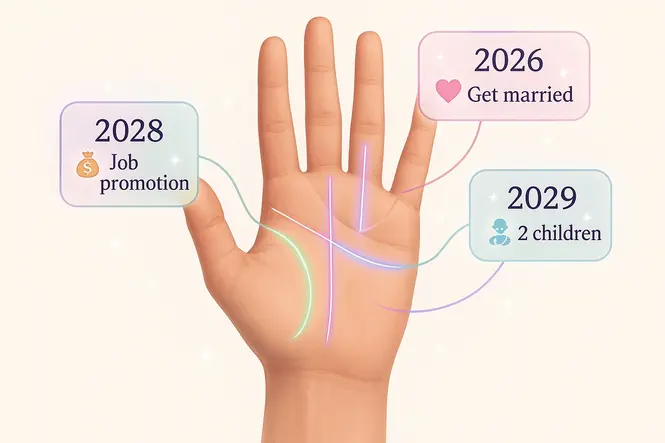
✨ See your future unfold ✨
2-min Quiz
Palm Scan
Personal Guide
37,000+ happy readings
What Is Different About Palmistry for Women?
Palmistry does not treat men and women identically. Traditional schools — Indian Hasta Samudrika, Chinese shou xiang, and Western chiromancy — each developed specific frameworks for reading women's hands, recognizing that the lines associated with relationships, family, and emotional life are more prominent and complex in most women's palms.
The most significant differences appear in three areas. First, women's heart lines tend to be longer, more curved, and more branched — indicating a richer emotional range and greater sensitivity in relationships. A long heart line that curves up toward the index finger suggests warmth and idealism in love; one that runs straighter points to a more pragmatic approach to partnership.
Second, marriage and relationship lines (the small horizontal lines on the outer edge of the palm below the little finger) are typically more defined in women, making them easier to read. Each clear line may indicate a significant relationship or marriage; their length and depth suggest the depth and duration of those bonds.
Third, the children's lines — fine vertical lines rising from the marriage lines — are almost exclusively readable in women's palms in traditional palmistry, as they were historically considered to reflect pregnancies and maternal bonds rather than a general fertility count.
Modern palmistry takes a more nuanced view: these lines may represent significant nurturing relationships, not only biological children. But their presence and clarity do seem to correlate with strong maternal or caregiving energy in a person's life.
Which Hand Should a Woman Read?
Dominant Hand — Your Present Reality
Your writing hand (usually the right) reflects how your life has actually unfolded: the choices you have made, the relationships you have built, and where you are heading. For most people, this is the primary hand for a reading.
- Current relationship patterns
- Career direction and life choices
- How your potential is being expressed
Non-Dominant Hand — Your Inherited Potential
Your non-dominant hand (usually the left) shows the traits and tendencies you were born with — your natural emotional temperament, innate strengths, and the blueprint of potential that life began with.
- Natural emotional tendencies
- Inherited personality traits
- Untapped potential and latent gifts
Can Palmistry Reveal Marriage Potential?
The short answer is: palmistry can suggest tendencies, timing windows, and relationship patterns — but it does not predict a single fixed destiny. Think of marriage lines as indicators of significant romantic commitments rather than a guaranteed wedding date.
The marriage lines (also called affection lines or union lines) sit on the side of the palm, just below the little finger. Here is what their appearance may indicate:
One deep, clear line
Suggests one dominant, lasting partnership. Often seen in people who marry once and maintain a strong, stable bond.
Multiple lines of similar depth
May indicate several significant relationships, each meaningful in its own right. Does not imply instability — more likely a rich romantic history.
Line curving upward
A positive sign associated with happiness in marriage and a partner who brings out ambition and growth.
Line curving downward
May suggest that a relationship faces challenges, or that the person tends to put others' needs ahead of their own in partnerships.
Broken or chained line
Can indicate disruptions, separations, or periods of difficulty in relationships. Not a prediction of divorce — often reflects temporary separations or intense emotional periods.
Fork at the end
A fork toward the palm may suggest divorce or separation. A fork away from the palm (toward the fingers) is traditionally considered favorable, indicating growth through the relationship.
Important context: Palm lines can and do change over time. A woman who works on her emotional availability and communication patterns may see her marriage lines become deeper and clearer over years. Palmistry is most useful as a mirror for self-reflection, not as a fixed verdict on your love life.
Can Palmistry Indicate Children?
Children's lines are among the most discussed — and most misunderstood — features in women's palmistry. They appear as fine, nearly vertical lines rising from the marriage lines on the outer edge of the palm. In traditional readings, each line was counted as a potential child, with deeper lines indicating stronger bonds or children who would have a greater impact on the mother's life.
Contemporary palmists tend to interpret these lines more broadly. They may represent:
Biological children
The traditional interpretation — each clear line may correspond to a child.
Deeply nurturing bonds
Strong lines may reflect stepchildren, adopted children, or children you mentor.
Creative or life projects
Some modern palmists see these as representing significant creative endeavors you 'birth' into the world.
Maternal energy
Their presence suggests a strong nurturing orientation, regardless of actual parenthood.
Timing
The position of the line on the marriage line may hint at the timing in life when these bonds form.
Line depth matters
A deep, clear line indicates a strong, lasting bond; a faint line, a more transient or distant relationship.
The Most Important Lines in Women's Palmistry
Heart Line
Runs horizontally across the top of the palm. In women's readings this is the primary indicator of emotional style, capacity for love, and how you experience intimacy. A long, deeply curved heart line indicates warmth, romance, and idealism. A straighter line suggests a more rational, less emotionally demonstrative approach to relationships.
Marriage / Relationship Lines
The small horizontal lines on the outer edge of the palm below the little finger. These indicate the number and nature of significant love relationships. Their depth, length, and any markings (breaks, forks, islands) give further detail about the quality and duration of those connections.
Children Lines
Tiny vertical lines rising from the marriage lines. Their number and clarity traditionally indicate the number and strength of your maternal bonds. Modern interpretation broadens this to significant nurturing relationships and creative projects.
Life Line
Curves around the base of the thumb. Despite common belief, it does not indicate lifespan — it reflects vitality, resilience, and the quality of your life energy. In women's readings, breaks or islands in the life line often correspond to periods of significant personal change such as childbirth, career shifts, or relationship transitions.
Fate / Career Line
A vertical line running up the center of the palm. Not all women have a prominent fate line — and its absence simply means a more self-directed path rather than one shaped by external circumstances. When present, it shows commitment to career or life purpose, with branches indicating pivots or dual paths.
Ready to Read Your Palm?
Upload a photo of your hand and our AI will analyze your heart line, marriage lines, children lines, and life path — completely free.
Start Your Free Reading